Call nowText us

Service

Concrete removal and replacement

Cracked, heaved, sunk, spalling or just past it. Taking concrete out is straightforward; the part worth paying attention to is diagnosing why it failed, because pouring a new slab onto the same problem gets you the same result a few years later.

Out cleanly, not smashed out

Saw cut on the lines where the new work will end, broken out, loaded and hauled. Cutting first means the neighbouring slab you are keeping does not get damaged and the joint between old and new is a straight line rather than a ragged edge.

Saw cut firstHauled awayClean joint line

Fix what broke it

Then the subgrade gets looked at. Washed-out fill, uncompacted trench backfill over a utility run, caliche that was poured over instead of removed — whatever moved under the old slab is still there, and it gets dealt with before the new one goes down.

Subgrade repairedRecompactedThen repoured

Detail

How a tear out and repour runs

Diagnosis first

Cracking tells you things. Long straight cracks mid-panel usually mean joints were too far apart or never cut. Cracks radiating from a corner point at settlement. Surface flaking and dusting is a finishing or curing problem, often a slab that got wet-troweled or froze young. Heaving over a line points at a utility trench that was never compacted. We look before we quote.

Saw cutting and selective removal

You do not always need to replace all of it. Where the rest of the slab is sound, we cut on the existing joints, take out only the failed panels and pour back. That saves real money on driveways, where the apron or one panel is often the only part that has gone.

Removal and haul away

Broken out, loaded and taken off site. Old concrete is heavy — a driveway's worth is measured in tons, not loads — and disposal is a genuine line item rather than an afterthought.

Subgrade repair before anything is poured

Recompaction, fill where material has washed out, caliche broken out where it was poured over, and proper backfill over any utility trench crossing the area. This is the step that decides whether the new slab lasts.

Repour, jointed properly this time

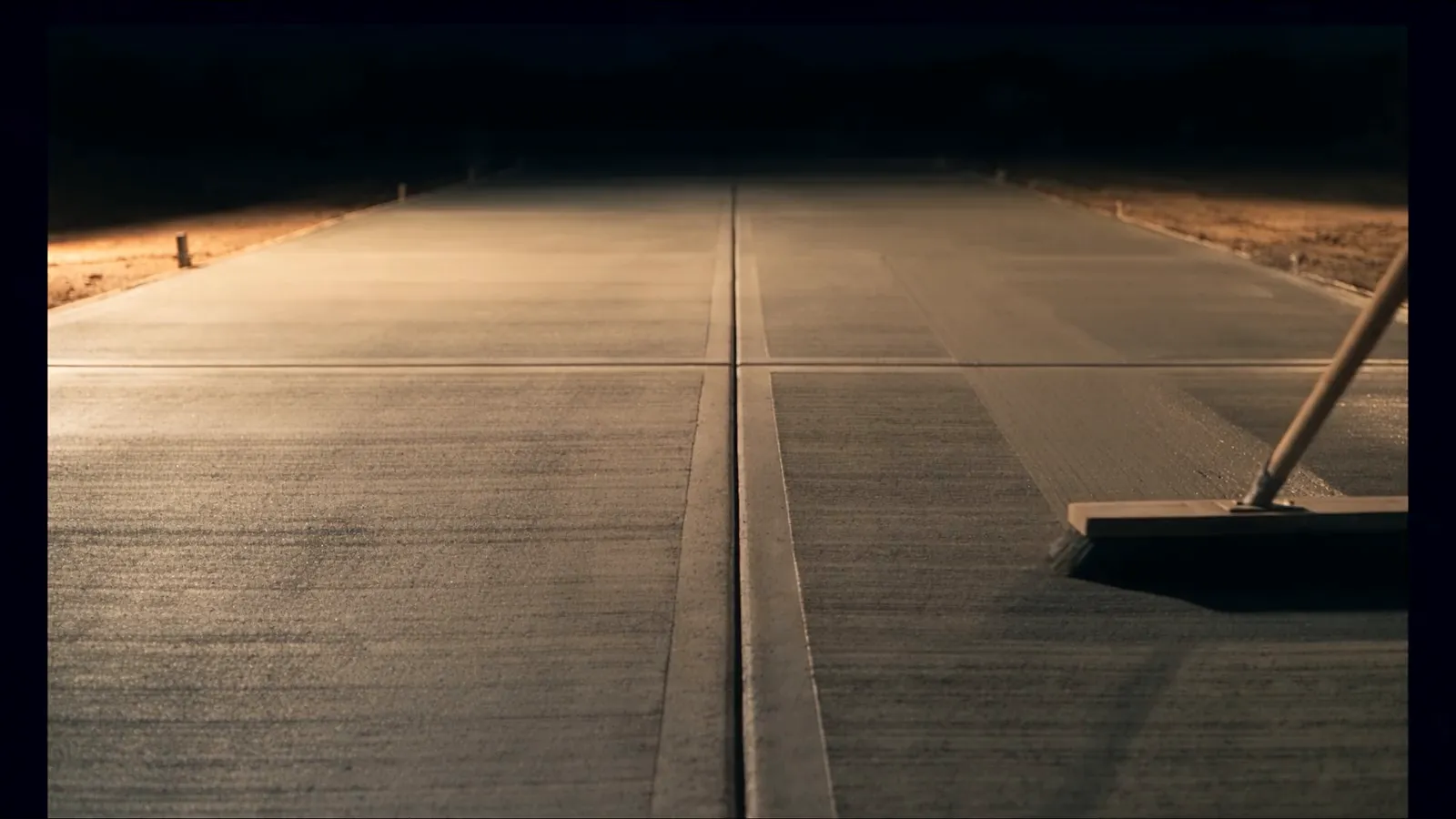
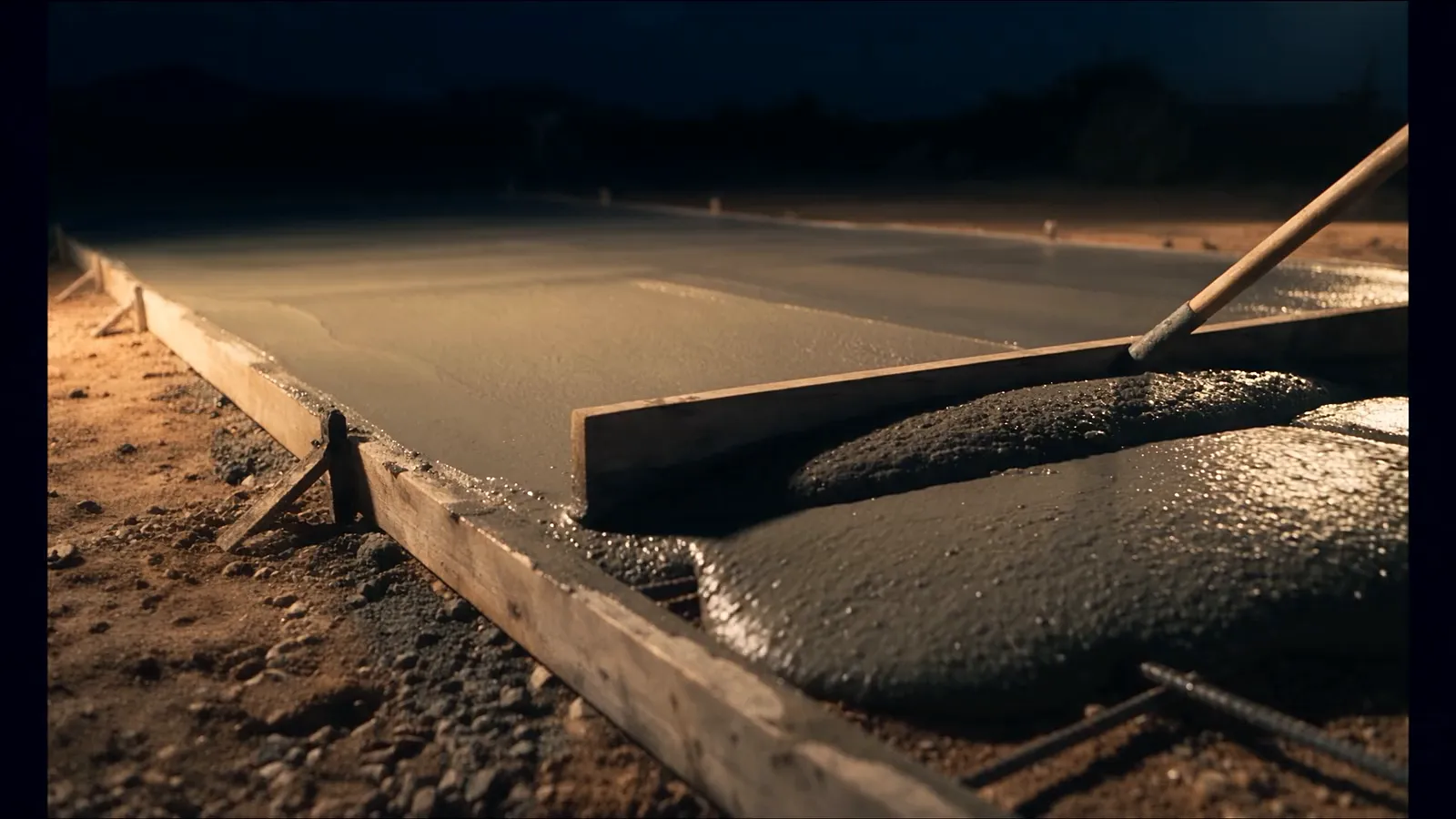
New slab to the right thickness with steel on chairs, joints laid out where they should be, and finish matched as closely as it can be to the concrete it adjoins.

Local conditions

Why slabs fail around here

Caliche is the usual suspect on the upland side. Where a slab was poured over a hardpan layer instead of through it, the ground does not compact evenly, and the slab eventually finds the soft spots and cracks into them.

Sheet flooding is the other one. Monsoon runoff spreading across an alluvial fan will scour fill out from under a slab edge over a few seasons, and the slab cantilevers until it snaps. If the water is still going to run there, the replacement needs to account for it or you will be doing this again.

Down in the river valley, the ground is soft alluvium and the failures look different — more settlement, less heave. And on any slab poured through a July in Bullhead City or Lake Havasu City, surface crazing and shrinkage cracking usually trace back to concrete that lost water faster than it could bleed.

Questions

Things people ask

Should I replace or repair my driveway?

If the slab is structurally sound and the cracks are cosmetic, repair or a partial panel replacement is the sensible call. If it is cracked through in multiple places, has settled unevenly, or the surface is spalling across large areas, patching is money spent twice. We will give you the honest version at the estimate, including when the answer is that it will last a few more years.

Can you pour new concrete over old?

It is possible with a bonded overlay in some cases, but it is usually a bad idea over a slab that has failed — whatever cracked the original will crack the overlay too, and now you have a thicker problem. If the old slab is sound and you just want a new surface, an overlay can work. If it is broken, take it out.

How long does removal and replacement take?

For a typical driveway: a day to cut and remove, a day or so for subgrade work, then the pour. Add curing time before you drive on it — about a week for cars, 28 days before anything heavy. So roughly a week and a half from start to being able to use it normally.

What happens to the old concrete?

We break it out, load it and haul it off. It is included in the estimate rather than turning up as a surprise at the end.

Free estimate

Tell us what you need poured

Estimates are free and there is no obligation attached to one. If you would rather just talk it through, the phone is faster than the form.

Goes straight to Eastin Concrete. No mailing list.