Call nowText us

Service

Flatwork and RV pads

Anything flat and structural: RV and boat pads, shop and garage floors, sidewalks, approaches, equipment pads, shed slabs. On the acreage lots out toward Golden Valley and Dolan Springs this is most of what gets poured, and an RV pad is the piece people most often see done wrong.

Sized for what is going to sit on it

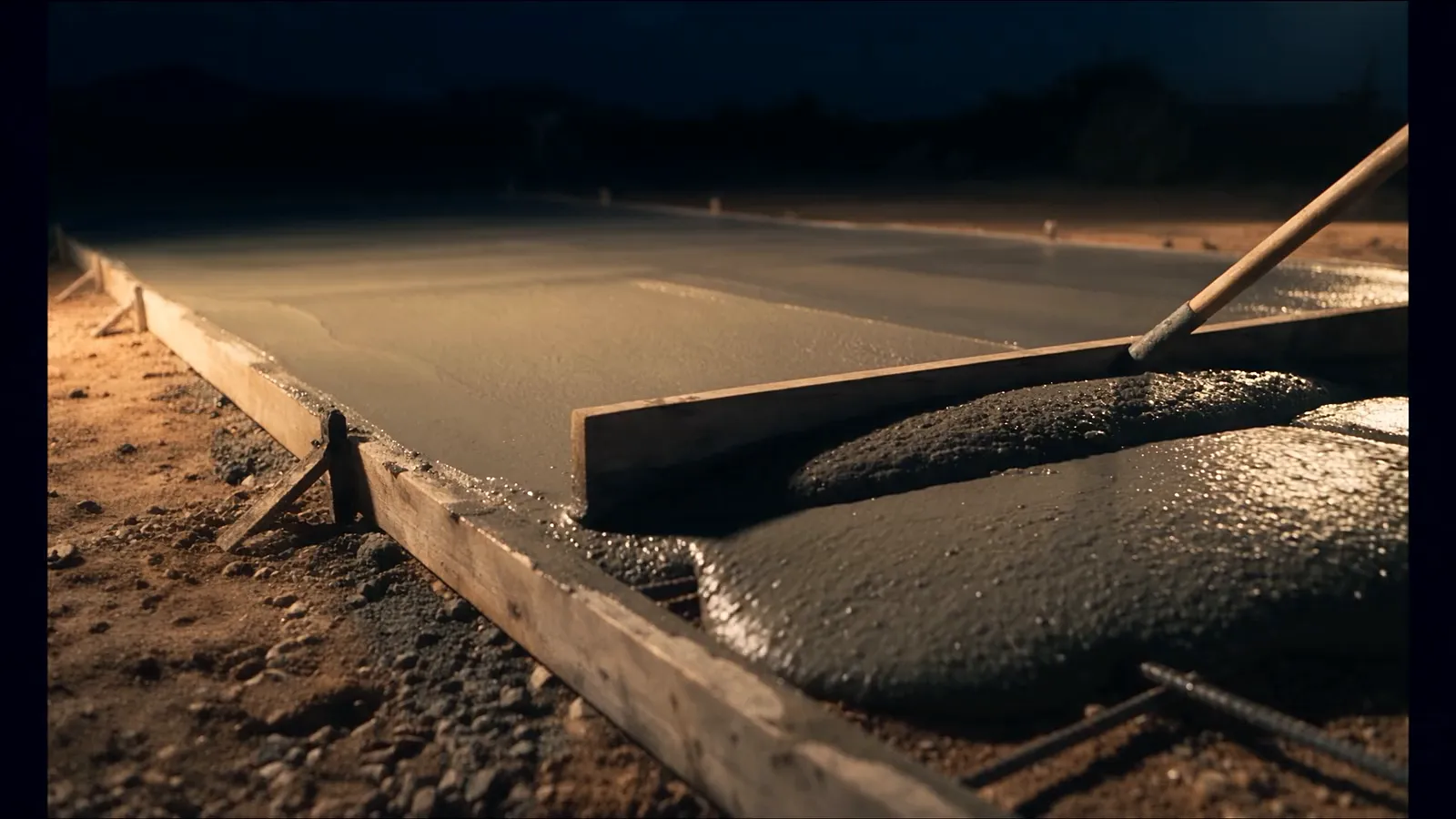
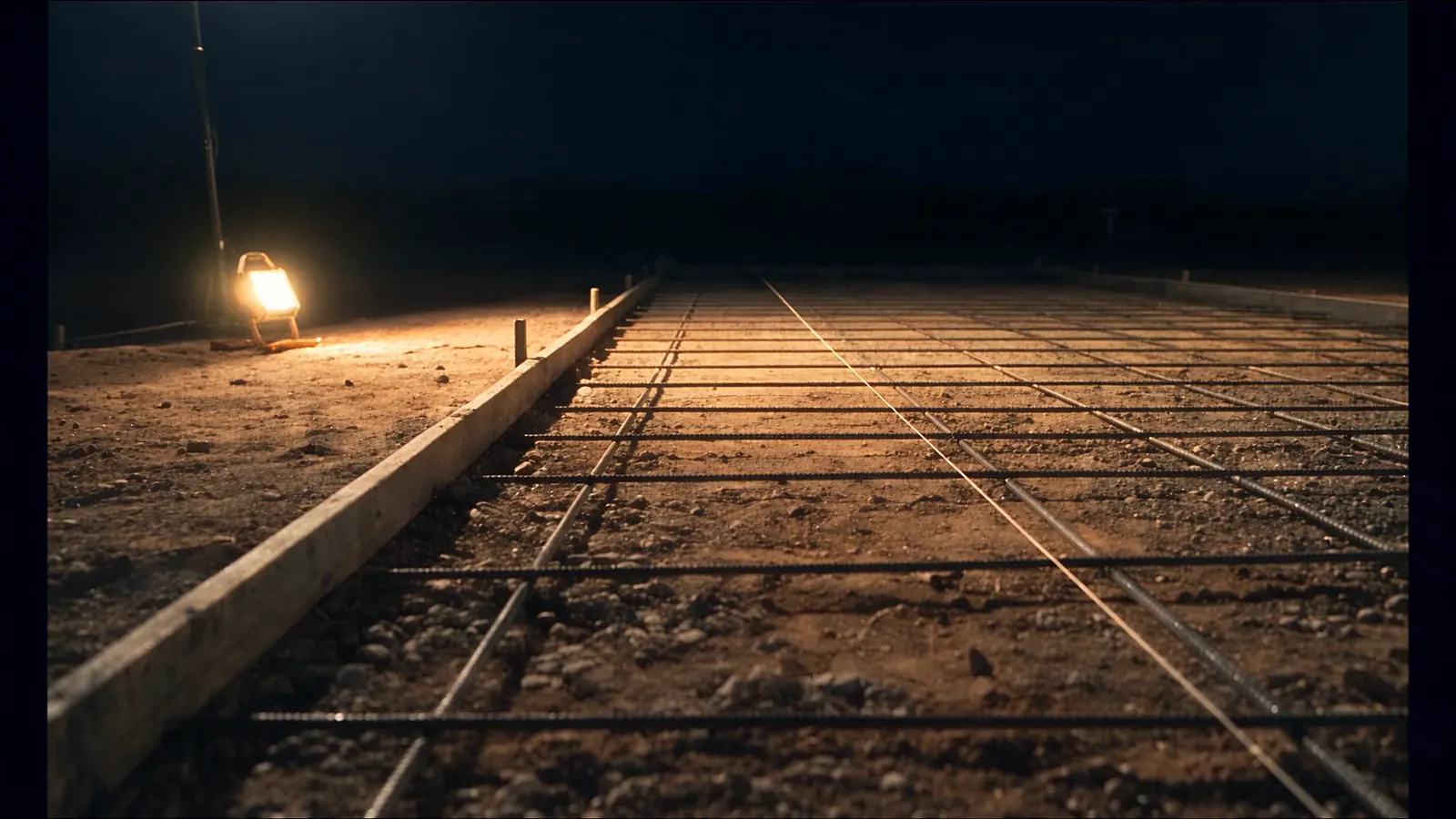
A loaded motorhome puts far more weight on far less contact area than a car does, and it puts it in the same four spots every time. The pad gets the thickness and the steel that load needs, and the subgrade under it gets compacted properly, or the slab spiderwebs at the jack points.

Six inch poursSteel through the middleCompacted subgrade

Approach, turn and level

A pad you cannot get onto is not much use. The approach, the turning space and the fall across the slab all get worked out on site before forms go in — including whether a rig can make the turn off the road at all.

Approach formed inTurning room checkedLevel where it counts

Detail

Flatwork we pour

RV and motorhome pads

Six inches with rebar through it is the usual specification for a pad that will hold a loaded Class A. Jacks and leveling blocks concentrate weight into small areas, and a four inch slab with mesh in it will crack at those points — not immediately, but reliably. The pad also gets levelled properly, because levelling a rig on a badly poured pad is a permanent annoyance.

Boat, trailer and vehicle parking

Extra parking beside the driveway, a pad for a fifth wheel, somewhere to put the trailer that is not dirt. Same principles, thickness matched to what is actually going to sit there rather than to what is cheapest.

Shop, garage and shed slabs

Floors for workshops, detached garages and outbuildings. If a vehicle lift, a press or heavy equipment is going in, tell us at the estimate — point loads change the thickness and the steel, and it is far cheaper to know before the pour than after.

Sidewalks, approaches and walkways

Paths from the drive to the door, side approaches, gates and equipment access. Small work, but it is the concrete people walk on every day and notice.

Equipment and utility pads

AC units, generators, propane tanks, well heads, pump houses. Small slabs with specific requirements, usually set by whoever is installing the equipment.
Local conditions

Why RV work is different out here

Mohave County is RV country and the parcels reflect it. Golden Valley is recorded as 100% rural and was largely subdivided into 2.5 acre lots, with plenty of properties on dirt access and no HOA. Fort Mohave and Lake Havasu City carry heavy snowbird and boating traffic. A pad here is not a nicety — it is where the rig lives.

Long driveways and dirt access change the job. Getting a ready-mix truck to the back of a five acre lot is a real question, and the answer affects the price and sometimes the layout. We check it on site rather than finding out on pour day.

Utilities and hookups are worth planning around before the forms go up. Running power, water or a dump connection to a pad is far easier before there is six inches of concrete over the route.

Questions

Things people ask

How thick does an RV pad need to be?

Six inches with rebar for a loaded motorhome or fifth wheel. Four inches is fine for a light travel trailer that is moved often, but the cost difference between four and six inches is small compared to replacing a cracked pad, and most people who ask end up choosing six.

How big should the pad be?

Measure your rig and add room to walk around it and put the awning out. Forty to forty five feet long and twelve to fourteen feet wide covers most Class A motorhomes. Slide-outs, an awning, and space to open the bays are what people forget.

Can you pour a pad if my lot is dirt and there is no paved road in?

Usually. What matters is whether a loaded truck can get in and turn without bogging down or tearing up your access. That is a site question and we will answer it honestly when we look at it — including if the answer is that it needs work first.

Do I need a permit for an RV pad?

In unincorporated Mohave County, flatwork not more than 30 inches above adjacent grade is generally exempt from a building permit. That exemption does not override zoning, drainage rules or right of way requirements, and cities set their own. Check before pouring; we will point you at the right department.

Free estimate

Tell us what you need poured

Estimates are free and there is no obligation attached to one. If you would rather just talk it through, the phone is faster than the form.

Goes straight to Eastin Concrete. No mailing list.