
Scattered building, long distances
Development out in the valley is sparse and spread out. Jobs here are rural by default: long driveways, remote pads, footings on parcels a good way off the pavement. Access gets checked before anything is promised.
Service area
The Hualapai Valley is not a town — it is the basin Kingman sits in. Roughly 60 miles long and 15 to 25 miles wide, bounded by the Cerbat Mountains and White Hills to the west and the Hualapai and Peacock Mountains to the south, running north to Lake Mead. Outside Kingman it is lightly populated with scattered rural development, and that is the property we pour for out here.
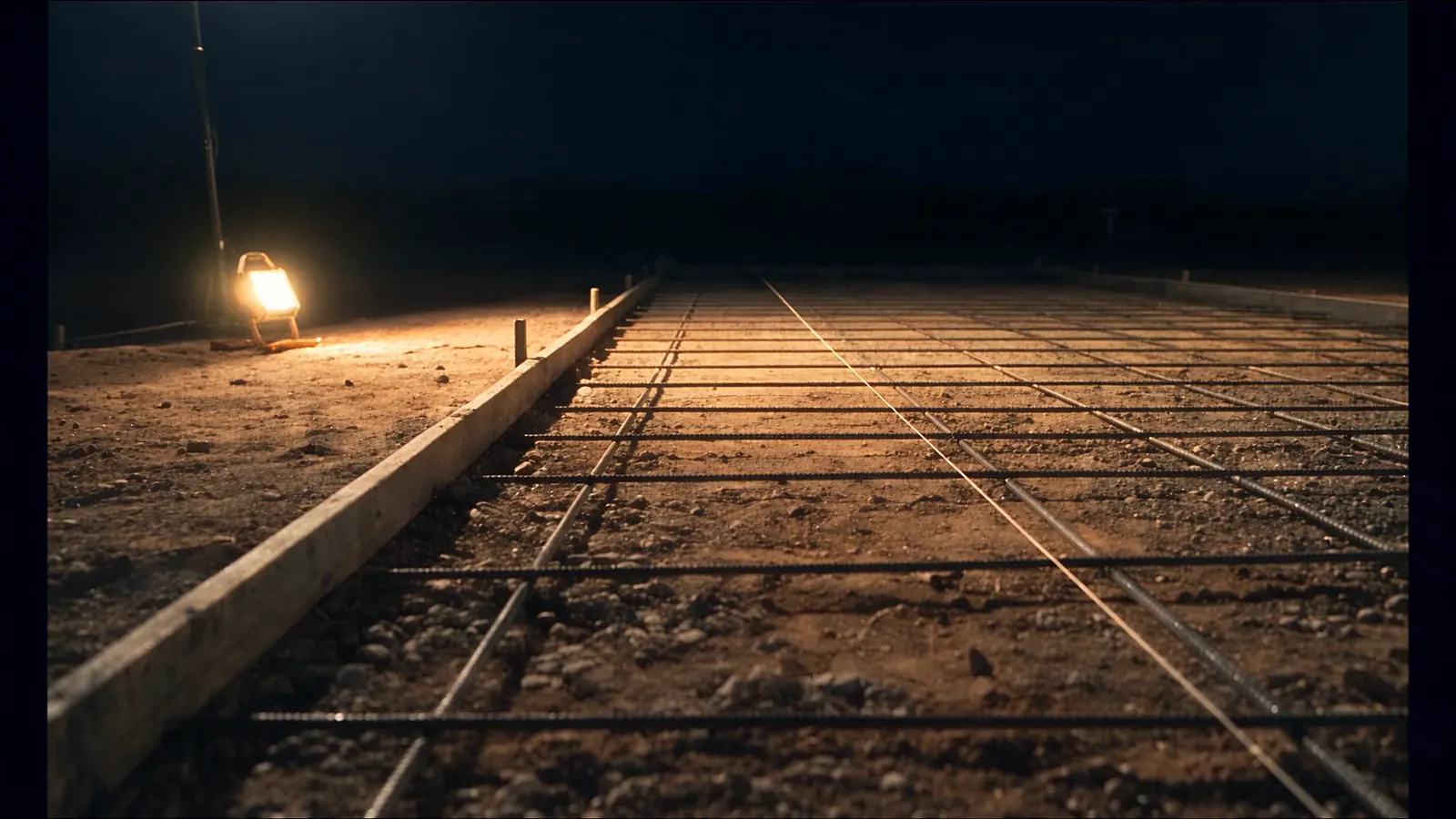
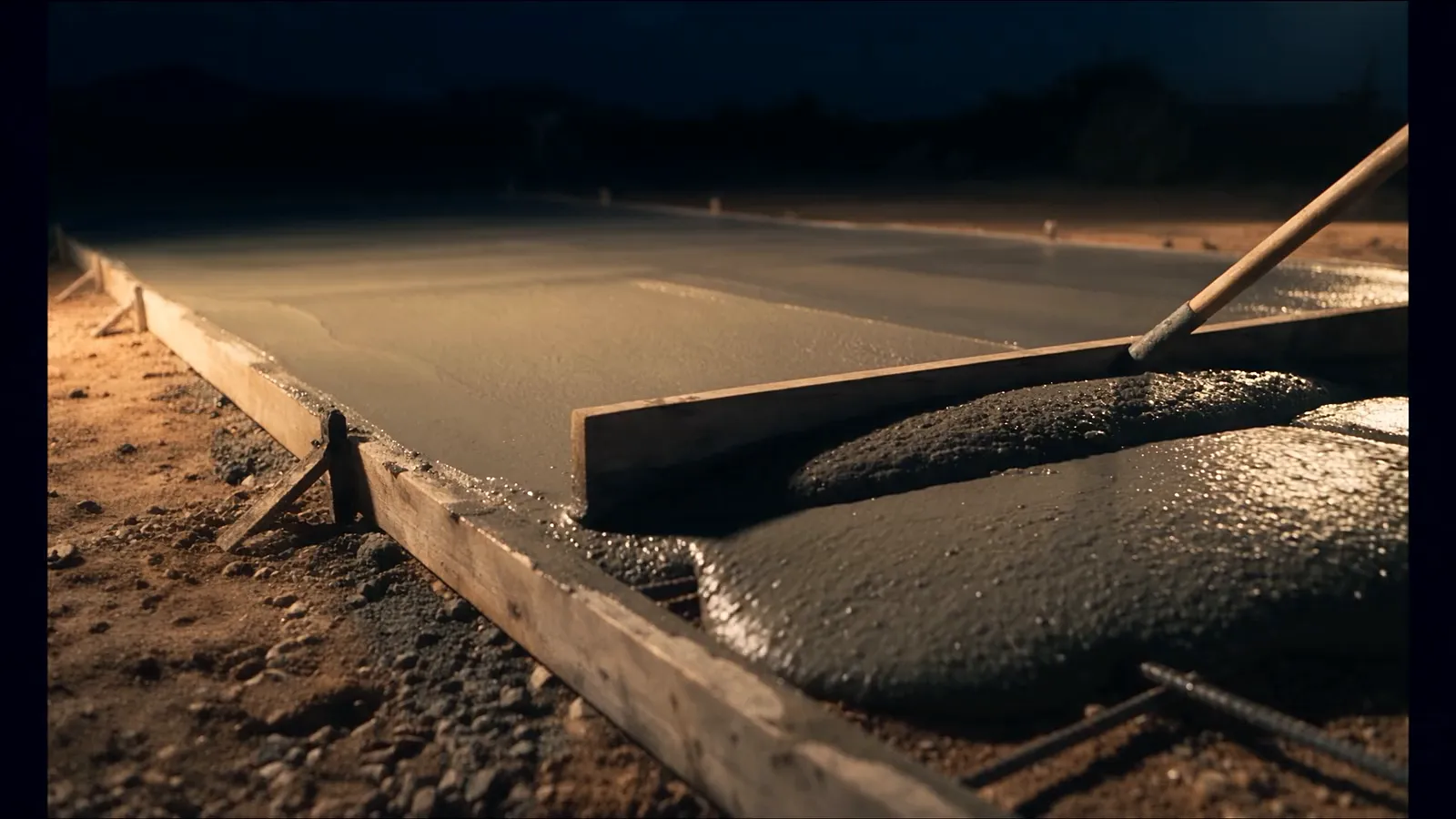
Development out in the valley is sparse and spread out. Jobs here are rural by default: long driveways, remote pads, footings on parcels a good way off the pavement. Access gets checked before anything is promised.
The valley floor runs from around 4,000 feet in the south down toward 400 feet where Hualapai Wash reaches Lake Mead. That is a genuine climate range within one basin — freeze protection matters at the south end and heat management at the north.
House and shop slabs, footings and foundations, RV pads and hardstanding, long driveways and approaches, well house and equipment pads, and retaining work where the ground calls for it.
The Hualapai Valley covers about 1,820 square miles and its floor drops from roughly 4,000 feet at the southern end to around 400 feet where Hualapai Wash enters Lake Mead. Surrounding peaks reach 6,500 to 7,150 feet.
That range means there is no single right answer for the valley. At the southern, higher end — around Kingman and above — freeze-thaw protection and air entrainment are the priority. Further north and lower, heat management takes over. We specify to the site rather than to the region.
The basin is filled with alluvium, evaporites and volcanic rock to depths exceeding 10,000 feet, so what is under a given slab varies considerably across the valley. Red Lake, a 22 square mile playa near the centre of the basin, is Arizona's second largest, and most of the basin's inflow evaporates there.
For building purposes the practical point is simple: the ground is not uniform, and a site out here deserves to be looked at on its own terms rather than assumed from a neighbouring parcel.
Services
Questions
No. It is the groundwater basin and valley that Kingman sits in, running roughly 60 miles north from the Kingman area toward Lake Mead. If you are searching for a contractor and your address is out in the valley, this is the page — and Kingman is the nearest centre.
Call and ask with the actual address. The limit is practical rather than a line on a map: whether ready-mix can reach the pour within its placement window, and whether a loaded truck can get in and turn.
Two things: whether a concrete truck can physically reach your build site, and what the ground under it actually is. Basin fill varies a lot across the valley, and a soils report is worth considering for anything structural.
Free estimate
Estimates are free and there is no obligation attached to one. If you would rather just talk it through, the phone is faster than the form.
Received
Usually the same day, and always within one working day. If it is urgent, calling is quicker than waiting on us.